What Is Egocentric Video Data — and Why Robotics AI Needs It
First-person video is quickly becoming one of the most valuable data types in AI. Here is what egocentric data is, why robotics and AR teams want it, and how to collect it well.
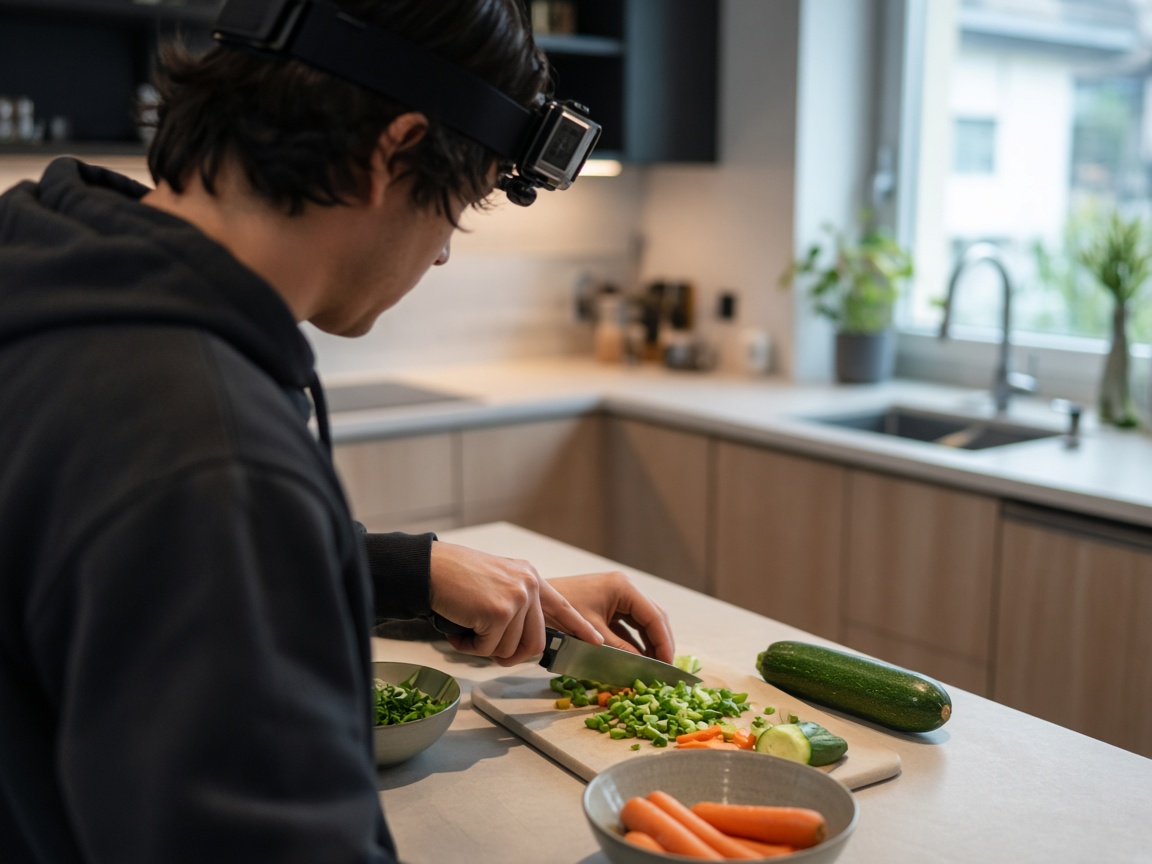
Most video on the internet is filmed from the outside looking in. A camera watches a person cook, assemble furniture or walk down a street. But robots and AI assistants do not experience the world that way — they need to see it from the inside, the way a person does while doing the task. That is exactly what egocentric video captures.
What is egocentric video data?
Egocentric video is recorded from a first-person point of view, usually with a head-mounted camera, smart glasses or a chest-mounted rig. The footage shows what the wearer sees: their hands, the objects they handle, the tools they reach for and the environment around them.
Because it captures intent and action at the same time, egocentric data teaches models not just what is in a scene, but how people interact with it.
Why AI teams want it
- Robotics and embodied AI: robots learn manipulation skills by watching how humans grasp, move and use objects.
- AR and smart-glasses assistants: an assistant that sees what you see can guide you step by step.
- Video understanding: action recognition, anticipation and step segmentation improve dramatically with first-person data.
- World models: large models that simulate the physical world need diverse, real-world human activity.
What makes a good egocentric dataset
Volume matters — but diversity, structure and consent matter more.
A useful dataset covers many people, homes, workplaces, regions and lighting conditions. It follows clear task protocols so key actions are captured consistently, and it includes rich metadata: activity labels, step boundaries, environment details and anonymised participant demographics.
Structured and natural capture
The best programmes combine scripted tasks — such as "prepare tea" or "assemble this shelf" — with natural, unscripted daily activity. Scripted tasks guarantee coverage; natural capture brings the long tail of real behaviour.
Privacy and consent
Every participant must give informed consent, and footage should be reviewed for bystanders and personal information, with blurring applied where required.
How Dhvani.ai helps
Dhvani.ai runs structured, scalable egocentric video programmes across diverse environments and demographics — from wearable rig setup and task design to capture, QA, metadata and optional annotation. If you are building robots, AR assistants or video models, we can help you design a dataset that reflects how the world really works.